Advanced Futures Trading Strategies for Crypto Markets
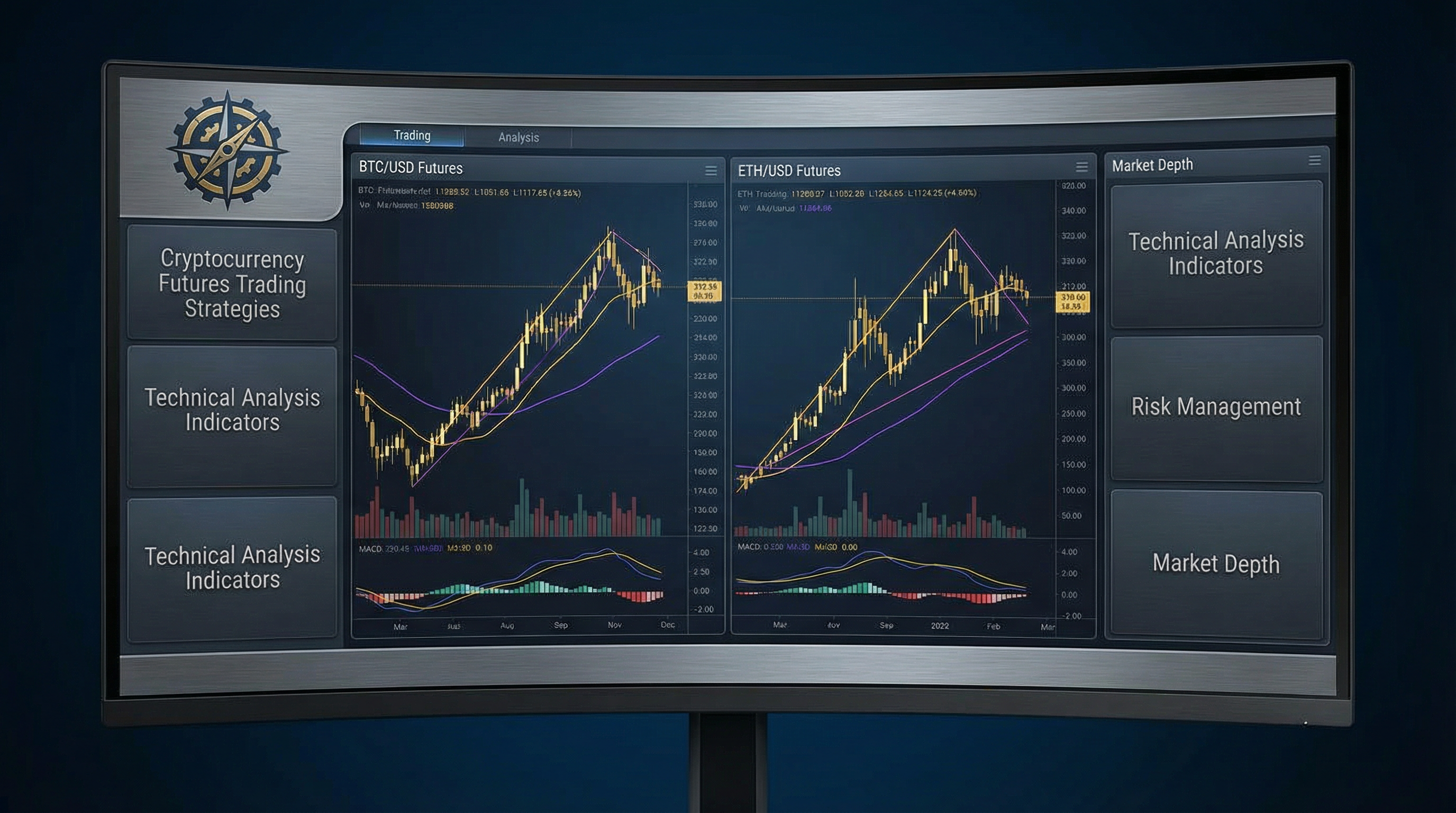
Cryptocurrency futures trading requires sophisticated strategies that go beyond simple directional bets. Professional traders employ advanced techniques combining position management, risk control, and market analysis to achieve consistent profitability in volatile markets. This comprehensive guide explores proven strategies for cryptocurrency futures trading.
Trend Following Strategies
Trend following remains one of the most reliable approaches in cryptocurrency futures markets. The strategy capitalizes on sustained price movements by identifying and riding established trends. Professional traders use multiple timeframe analysis, combining daily and hourly charts to confirm trend direction before entering positions.
Moving average crossovers provide clear entry signals. When the 50-period moving average crosses above the 200-period average, it signals potential uptrend entry opportunities. Conversely, downward crossovers indicate short position opportunities. Combining this with volume analysis enhances signal reliability, as strong trends typically accompany increasing volume.
Mean Reversion Techniques
Mean reversion strategies exploit cryptocurrency market overreactions. When prices deviate significantly from historical averages, they tend to revert to mean levels. Bollinger Bands effectively identify these extremes—prices touching the upper band suggest overbought conditions, while lower band touches indicate oversold scenarios.
The Relative Strength Index (RSI) complements Bollinger Band analysis. RSI readings above 70 signal overbought conditions suitable for short positions, while readings below 30 indicate oversold conditions for long entries. Combining these indicators with support and resistance levels increases strategy effectiveness.
Breakout Trading Approach
Breakout strategies capture explosive price movements when cryptocurrency prices breach significant support or resistance levels. Professional traders identify consolidation patterns—triangles, rectangles, and flags—that precede major breakouts. Volume confirmation is critical; genuine breakouts typically show 150-200% above average volume.
False breakouts represent the primary risk. Implementing confirmation filters reduces false signals. Wait for price to close beyond the breakout level for at least two consecutive periods before entering. Additionally, measure the consolidation pattern's height and project it from the breakout point to establish profit targets.
Position Sizing and Leverage Management
Proper position sizing determines long-term trading success. The 2% rule provides a solid foundation—never risk more than 2% of total capital on a single trade. With cryptocurrency futures offering up to 150x leverage, position sizing becomes even more critical. Calculate position size based on stop-loss distance rather than arbitrary percentages.
Leverage amplifies both gains and losses. Conservative traders use 5-10x leverage, while aggressive strategies may employ 20-30x. Higher leverage requires tighter stop-losses and smaller position sizes. Professional traders often scale into positions, starting with 30% of intended size and adding incrementally as the trade moves favorably.
Risk Management Framework
Comprehensive risk management separates professional traders from amateurs. Always define stop-loss levels before entering trades. Place stops beyond significant technical levels—not at obvious points where stop-hunting occurs. Use trailing stops to protect profits as trades move favorably, adjusting them to lock in gains while allowing room for normal price fluctuations.
Diversification across multiple cryptocurrency pairs reduces portfolio risk. Avoid concentrating positions in correlated assets. When Bitcoin dominates your portfolio, altcoin positions often move in tandem, eliminating diversification benefits. Maintain exposure across different market cap categories and use cases.
Conclusion
Successful cryptocurrency futures trading combines multiple strategies adapted to current market conditions. Trend following works best in directional markets, mean reversion excels during range-bound periods, and breakout strategies capture explosive moves. Regardless of strategy, disciplined position sizing and rigorous risk management remain paramount. Professional traders continuously refine their approaches, maintaining detailed trade journals to identify strengths and weaknesses. Consistent profitability emerges from systematic execution rather than occasional lucky trades.
Ready to implement these strategies on a professional platform?